AKA: CM, C magg, CMaj, Cmaj, C Major
CMaj Accordion Chord Chart
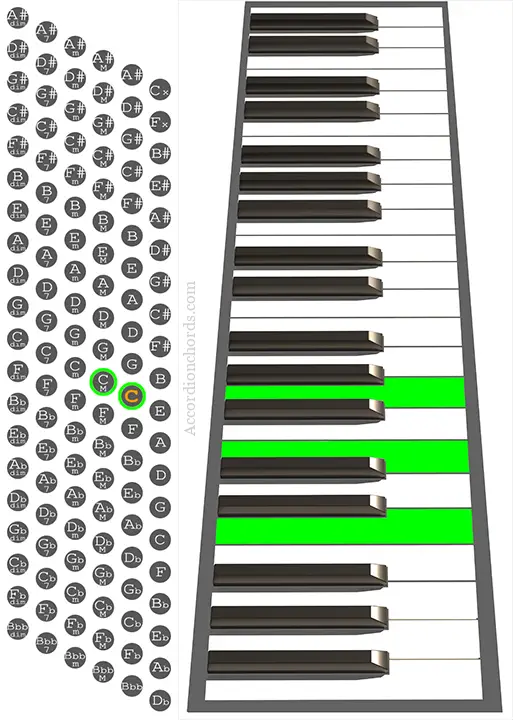
Major Chords
A major chord is a triad built from the Root, 3rd, and 5th notes of the major scale. It’s built by combining a 3rd major interval with a 3rd minor interval, for example in C Major we have a major 3rd interval which is C-E and a minor 3rd interval, which is E-G. A major chord has a bright, cheerful sound that is often used as the tonic chord in a piece of music.
Major chords are an essential part of music theory, and they are used in a wide range of musical styles. They are the basis for many different chord progressions, and they are often used as the foundation for more complex chords and voicings.
The formula for major chords is R, 3°, 5°
Major Chords on Accordion
On a standard bass accordion, major chords are located on the 3rd column next to the root bass buttons (or on the second column if the accordion does not have a counter-bass column).
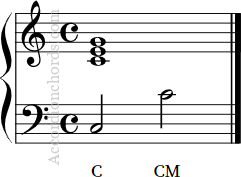
Notes:
C, E, G
Intervals:
R, 3°, 5°
Left hand:
C + CM
Fingering:
4 + 3
I am new in playing accordion. Happy to read and your guidance. I need more of these. I am from Nairobi Kenya
Thanks for your message!
I’m really glad you found the content helpful.
Wishing you all the best!
I have trouble with continued motivation to learn. I’ve taken no formal lessons. Everytime i hear someone play I say to myself I’m going to do that, yet I don’t follow through on my accordion.
Do you have a practical suggestion?
This is actually very common, especially for self-taught players.
The key thing to understand is this: motivation is unreliable — what really makes the difference is building a small, consistent habit.
From my experience (and what I explain in this article), beginners can already play simple pieces in 2–8 weeks, but only if they practice consistently—even for short sessions.
So here’s a practical approach that works:
1. Make it ridiculously easy to start
Don’t aim for a 1-hour session. Just tell yourself: “I’ll play for 5 minutes.”
Most of the time, once you start, you’ll keep going.
2. Leave the accordion visible
If it’s in the case, it becomes “a project.”
If it’s already there, it becomes “something you just pick up.”
(This simple trick alone helps a lot with consistency.)
3. Fix a specific time
Same time every day → it becomes automatic.
Your brain loves routine, and after a couple of weeks it feels natural.
4. Lower your expectations
You don’t need to “become good.”
Just aim to play something simple. Even very simple pieces are enough at the beginning.
5. Focus on streaks, not motivation
Don’t ask: “Do I feel like practicing?”
Ask: “Did I play today?”
One important thing: many people think they lack motivation, but actually they’re expecting too much too soon. Progress on accordion is gradual, but very real if you stick with it.